Key Takeaways: A critical violation isn’t an automatic fail, but it’s the red flag you can’t ignore. It means something is actively creating a risk for foodborne illness right now. The real goal isn’t just to pass; it’s to understand why these rules exist so they become part of your daily rhythm, not a scramble before the inspector arrives.
Most people think a health inspection is a pass/fail exam. You either get an A or you’re shut down. In reality, it’s more like a snapshot of your day-to-day food safety habits. And in that snapshot, critical violations are the blurry, out-of-focus parts that demand immediate attention. They’re what keep operators up at night, and honestly, they should.
We’ve talked to dozens of restaurant and café owners in Silver Spring after their inspections, and the same confusion pops up: “I got a critical for my tuna salad being at 48°F, but my place is spotless! How is that fair?” It’s a valid frustration. You can have gleaming floors and still make someone seriously ill. That’s the core thing to understand.
What is a Critical Violation?
In plain terms, a critical violation is a lapse in procedure that directly and significantly increases the risk of foodborne illness. It’s not about a dusty ceiling tile or a minor paperwork error. It’s about time, temperature, contamination, and hygiene—factors that let pathogens thrive. If an inspector sees one, they will note it, and you must correct it on the spot or as soon as humanly possible. It’s the “this cannot wait” category.
The Montgomery County Department of Health and Human Services follows the FDA Food Code, so their focus is consistent. Think of it this way: non-critical violations are often about the condition of the facility. Critical violations are about the conduct that affects food safety.
The Usual Suspects (And Why They’re So Common)
You’ll see the same critical items on report after report. Not because inspectors are lazy, but because these are the high-risk pressure points in any busy kitchen.
Temperature Abuse. This is the heavyweight champion. It covers the “Danger Zone” (41°F to 135°F) where bacteria multiply rapidly.
- Cold Holding: That tuna salad at 48°F? Critical. The milk on the counter during prep? Critical.
- Hot Holding: Soup on the line at 118°F? Critical.
- Cooking: Undercooked poultry (must reach 165°F) or ground beef (155°F)? Absolutely critical.
- Cooling: A massive pot of chili left to cool on the counter overnight is a classic, dangerous mistake. Proper cooling requires getting food from 135°F to 70°F within two hours, and then down to 41°F within four more. It’s a process, not an event.
Cross-Contamination. This is where good intentions meet chaotic service. Using the same cutting board for raw chicken and then for lettuce without washing, rinsing, and sanitizing in between is a direct ticket to a critical violation. Storing raw meat above ready-to-eat food in the cooler is another big one—drip contamination is real.
Poor Personal Hygiene. This one stings, but it’s vital. An employee handling ready-to-eat food with bare hands is a critical violation (gloves or utensils are required). So is an employee who’s ill with symptoms like vomiting or diarrhea still working. It’s not personal; it’s epidemiological.
Sanitizer Issues. Your three-compartment sink is set up, but your sanitizer bucket has no measurable chlorine or quat ammonia? That’s critical. You’re just moving germs around. The test strips aren’t a suggestion; they’re your proof that the system is working.
Beyond the Checklist: The Real-World Gray Areas
Here’s where experience matters. The code is black and white, but a kitchen is all color and noise. An inspector isn’t just looking for a number on a thermometer; they’re assessing your behavior and knowledge.
For example, they might watch how you handle a delivery. Are you checking the temp of that fresh fish immediately with a calibrated probe, or just shoving it in the walk-in? That moment tells them everything about your daily practices. They might ask a cook, “How long can this potato salad sit on the buffet?” The answer they want isn’t “I don’t know,” but “Four hours, and then we discard it and note the time.” It’s about active managerial control.
We’ve seen a smart operator in downtown Silver Spring avoid a critical for temperature by demonstrating their process: “You’re right, that pasta salad just hit 45°F. We cycle it out every 90 minutes as part of our written procedure—here’s the log, and the fresh batch is at 38°F.” That shows understanding, not just compliance.
When a “Critical” Doesn’t Mean Doom
This is crucial: A critical violation does not automatically mean a failing score or a shutdown. It means you have an imminent hazard that must be corrected immediately. A good inspector will often stand there while you fix it—you move the food, you adjust the thermostat, you remake the item with proper gloves. Once it’s corrected, the violation is noted as corrected on-site. The impact on your score is lessened.
The real trouble comes with repeat critical violations, or a pattern of them that shows a systemic lack of control. That’s when you’re flirting with conditional passes or closures. It signals you didn’t learn from the last visit.
Practical Trade-Offs & Costly Misunderstandings
| Consideration | The Temptation (The Mistake) | The Better Practice (The Investment) |
|---|---|---|
| Equipment | “My cooler feels cold, the dial says 38°F.” | Use a calibrated probe thermometer daily. Dials lie. A $50 thermometer is the cheapest insurance you’ll ever buy. |
| Staff Training | Handing a new hire a 50-page manual on day one. | Daily 2-minute huddles. “Today, we’re focusing on glove use when handling bread.” Consistent, bite-sized training sticks. |
| During Rush | Letting food sit in the window while expo finds the missing side. | Train for the lag. If a plated hot dish will wait more than a minute, have a designated holding area that keeps it above 135°F. |
| Corrective Action | Panicking and just sticking the warm item back in the cooler. | Have a written plan. “If soup drops below 135°F, we reheat it to 165°F within one hour or discard it.” This turns a crisis into a procedure. |
A common, costly misunderstanding is treating the inspection as an adversary. The inspector isn’t your enemy. They’re the embodiment of your customer’s worst-case scenario. If you see them as a partner in preventing that scenario, the whole dynamic changes. We know a bakery in Kemp Mill that actually asks for a pre-opening consultation when they change a menu item. It’s brilliant.
When to Call for Backup
You can train and prep all you want, but sometimes the problem is in the walls. If you’re in an older building near Sligo Creek or in downtown Silver Spring, your equipment might be fighting a losing battle. A walk-in cooler that can’t hold temp on a 95°F day isn’t a management failure—it’s a mechanical one.
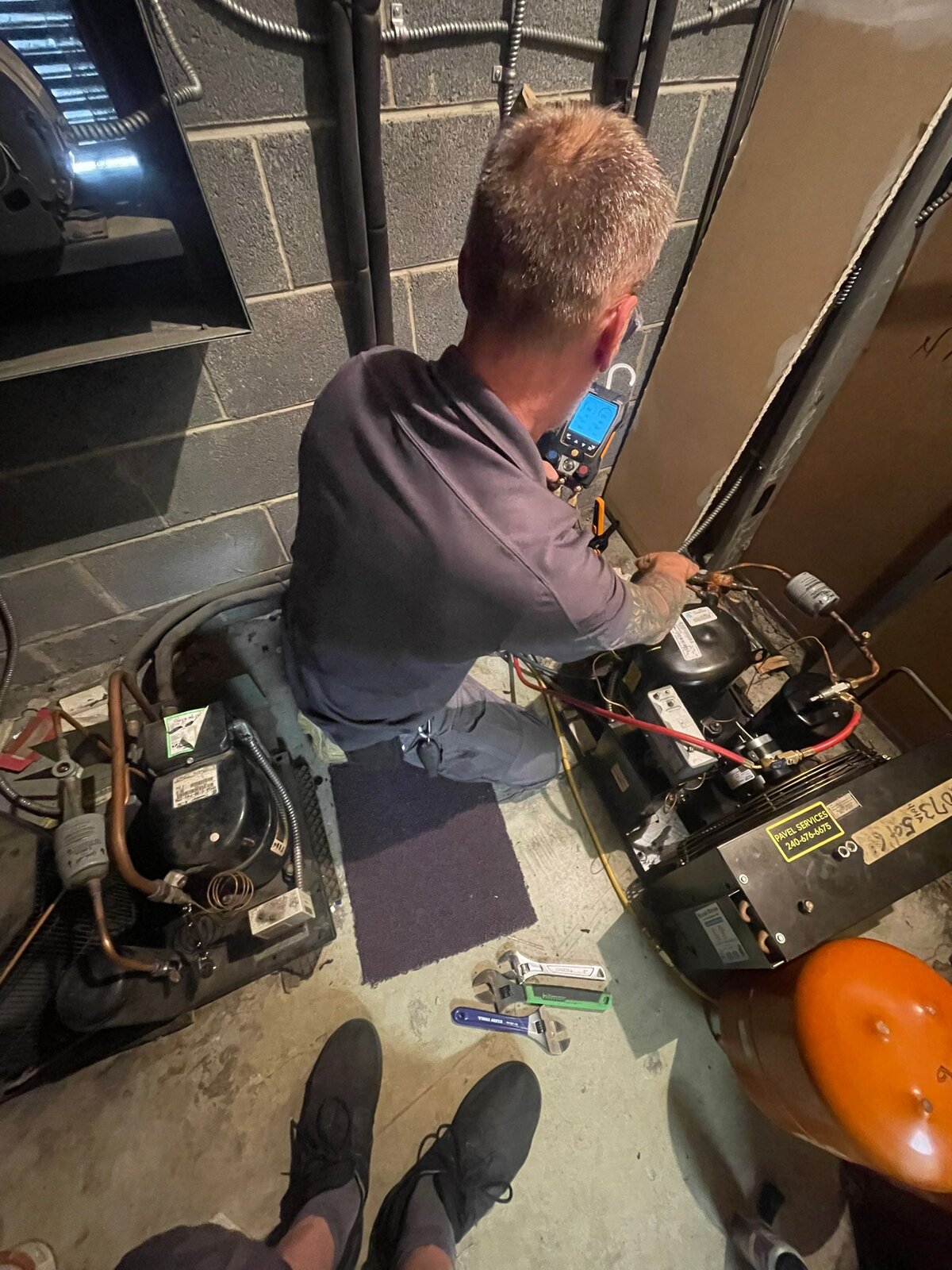
That’s when knowing a trusted professional is worth it. If you’re constantly battling temperatures despite good habits, the issue is likely with your refrigeration system—a leak, a failing compressor, poor insulation. A specialist like Pavel Refrigerant Services in Silver Spring can diagnose issues your regular handyman can’t. They understand the specific pressure and refrigerant requirements for commercial food holding. Spending $300 on a proper diagnosis can save you $5,000 in lost product and violation fees, not to mention your reputation. It’s the definition of a smart business move.
The Mindset That Actually Passes Inspections
Forget cramming. The goal is to make food safety culture so ingrained that an inspection day feels like a Tuesday. It’s about shifting from “What do I need to hide?” to “What do I want to show off?”
Do your own mock inspections. Use the same form the county uses. Be ruthless. When you find a gap, fix the system, not just the symptom. Why was the tuna salad warm? Was the prep batch too big? Was it placed in the front of the cooler where the door opens? Fix the root cause.
In the end, understanding critical violations is about respect—for your customers’ health, for your team’s hard work, and for the longevity of your own business. A clean inspection report isn’t a trophy; it’s a receipt. It proves you’re doing the quiet, essential work every single day. And that’s what builds a place people trust enough to come back to, long after the inspector has left.
Related Articles
People Also Ask
A critical priority item violation during a health inspection is a major infraction that poses an immediate and direct threat to public health, safety, or security. These violations typically involve failures in core food safety protocols. Common examples include evidence of pest infestation, improper holding temperatures for potentially hazardous foods (allowing them to remain in the "danger zone" between 41°F and 135°F), cross-contamination between raw and ready-to-eat foods, lack of hot and cold running water at a handwashing sink, and employees working while ill with a reportable condition. Such violations often require immediate corrective action on-site and can lead to enforcement actions like permit suspension or closure if not resolved promptly.
A critical violation in HVAC and refrigeration refers to a safety or health hazard that poses an immediate risk. In commercial refrigeration, this often involves refrigerant leaks above a specific threshold, as mandated by EPA Section 608 regulations. Such leaks can release ozone-depleting substances or high-global warming potential gases, causing environmental harm and potential safety issues like oxygen displacement. Other critical violations include improper system evacuation, lack of emergency ventilation in machinery rooms, or incorrect pressure relief valve installation. These violations typically require immediate corrective action to avoid significant fines, operational shutdowns, or safety incidents. Regular maintenance and proper technician certification are essential for compliance.
Two major violations on a health inspection typically involve critical food safety hazards that directly contribute to foodborne illness. The first is improper temperature control of potentially hazardous foods, such as failing to keep hot foods above 135°F or cold foods below 41°F. This allows dangerous pathogens like Salmonella and E. coli to multiply rapidly. The second is poor personal hygiene and contamination, including employees not washing hands properly, working while ill, or allowing cross-contamination between raw and ready-to-eat foods. These violations are considered major because they pose an immediate and substantial risk to public health, often resulting in immediate corrective action and potential closure if not addressed promptly.
The most common health code violations in restaurants often involve temperature control, cross-contamination, and sanitation. Improper food holding temperatures (both hot and cold) is a top violation, as it allows bacteria to grow. Poor personal hygiene, like employees not washing hands properly, is another major issue. Cross-contamination between raw and ready-to-eat foods is a critical risk. Other frequent violations include improper cleaning and sanitizing of equipment, pest infestations, and food from unapproved sources. Inadequate chemical storage, poor facility maintenance (like broken coolers), contaminated equipment surfaces, and improper waste disposal round out the list. Regular staff training and proactive monitoring are essential for compliance.
Restaurant health inspection reports are official documents issued by local health departments to assess a food service establishment's compliance with public health codes. These reports, often publicly available, detail findings from unannounced inspections, covering critical areas like food temperature control, employee hygiene, sanitation, and pest management. A poor score or major violation can lead to fines, mandatory re-training, or even temporary closure. For operators, proactively understanding common pitfalls is essential for maintaining a safe operation and public trust. We strongly recommend reviewing our detailed internal guide, The 10 Most Common Health Code Violations For Restaurants In Montgomery County, which provides crucial insights for compliance. Regular self-audits based on these standards are the best defense against violations during an official inspection.
To look up health inspections for a business, start by identifying the local or state health department with jurisdiction. Most departments maintain online databases accessible via their official websites. Use the search function, entering the business name, address, or permit/license number. For restaurants and food service establishments, these records are often public and may include inspection dates, violations noted, corrective actions, and final scores. You can also contact the health department directly by phone or email for records requests. For comprehensive results, ensure you have the correct legal business name, as inspections are typically filed under that official designation.