When Your Kitchen’s Cold Heart Skips a Beat: Top 5 Commercial Refrigeration Emergencies We See (And How to Survive Them)
Okay, let’s be real for a second. Running an urban kitchen – whether it’s a bustling downtown bistro in Washington, a packed pizza joint in Arlington, or that killer brunch spot in Wheaton – is basically like conducting an orchestra during an earthquake. Beautiful chaos, right? Until the cold stuff stops working. Then? Pure panic. We’ve seen it all over the years, especially here in Montgomery County, and trust us, when refrigeration goes down, it’s not just inconvenient; it’s a full-blown, profit-eating, health-department-summoning emergency.
We’re the folks at Pavel Refrigerant Services, and we’ve been elbow-deep in commercial refrigeration repair across Silver Spring, Rockville, and beyond for longer than we care to admit (let’s just say we remember when ice was a luxury item, not a given). We’ve answered more 3 AM “HELP!” calls than we can count. So, grab a coffee (hopefully still cold!), and let’s talk about the top 5 emergencies that make even the coolest chef sweat – and why knowing your nearest expert is non-negotiable.
1. The Great Freeze-Out: Total System Failure (AKA: The Kitchen’s Heart Attack)
Lights Out, Cold’s Out: When Everything Just Stops
Imagine walking in pre-dawn, ready for the breakfast rush, and… silence. No hum. No chill. Just the ambient warmth of impending disaster. Total system failure isn’t just an emergency; it’s the emergency. This isn’t a slightly warm salad bar; this is every fridge, freezer, and cooler deciding to take a collective nap. Spoilage happens fast, inventory becomes landfill fodder, and service grinds to a halt. Price tag? Astronomical. Think lost sales plus restocking costs plus potential fines. Ouch.
- Why It’s an Emergency: Minutes count. Food safety goes out the window fast. You’re losing money by the second.
- What We See: Often caused by massive electrical issues, catastrophic compressor failure (see #3!), or control board meltdowns. It’s rarely a simple fix.
- The Pavel Lifeline: This is DEFCON 1 for us. When we get this call, we drop everything. Our vans are stocked for major diagnostics and repairs. We know finding the closest commercial refrigeration service that can handle this scale is critical – that’s why we prioritize these calls and have techs strategically located. Don’t gamble; call Pavel Refrigerant Services immediately if your entire cold chain collapses. Seriously, just pick up the phone.
2. The Silent Killer: Refrigerant Leaks (AKA: The Slow, Expensive Suffocation)
Hissing the Profit Away: The Stealthy Refrigerant Leak
This one’s sneaky. Your unit might still be running… kinda. Maybe it’s struggling, maybe it’s cycling weirdly, maybe it’s just not getting as cold as it should. But that faint hissing sound? Or that oily residue near pipes? That’s your precious (and expensive!) refrigerant gas escaping. Low refrigerant means your compressor works harder, efficiency plummets, energy cost skyrockets, and eventually, the system fails. It’s like your fridge is slowly bleeding out.
- Why It’s an Emergency: It will lead to a bigger failure (like #1 or #3). It wastes energy and money constantly. Plus, EPA regulations on handling refrigerants are no joke – you need certified pros.
- What We See: Pin-hole leaks in coils, failed schrader valves, worn seals. Often found during routine commercial refrigeration maintenance (hint, hint!).
- The Pavel Fix: We don’t just top it off and run. We use electronic leak detectors to find the exact source, repair it properly, evacuate the system, and recharge it to the precise manufacturer’s spec. Ignoring a leak is literally throwing money into the air. If you suspect one near you, get Pavel Refrigerant Services on the case before it becomes a crisis. We handle refrigerant by the book.
3. The Beast That Roars (Then Dies): Compressor Failure (AKA: The Money Pit’s Engine Blowing)
When the Heart of the Machine Gives Up: Compressor Catastrophe
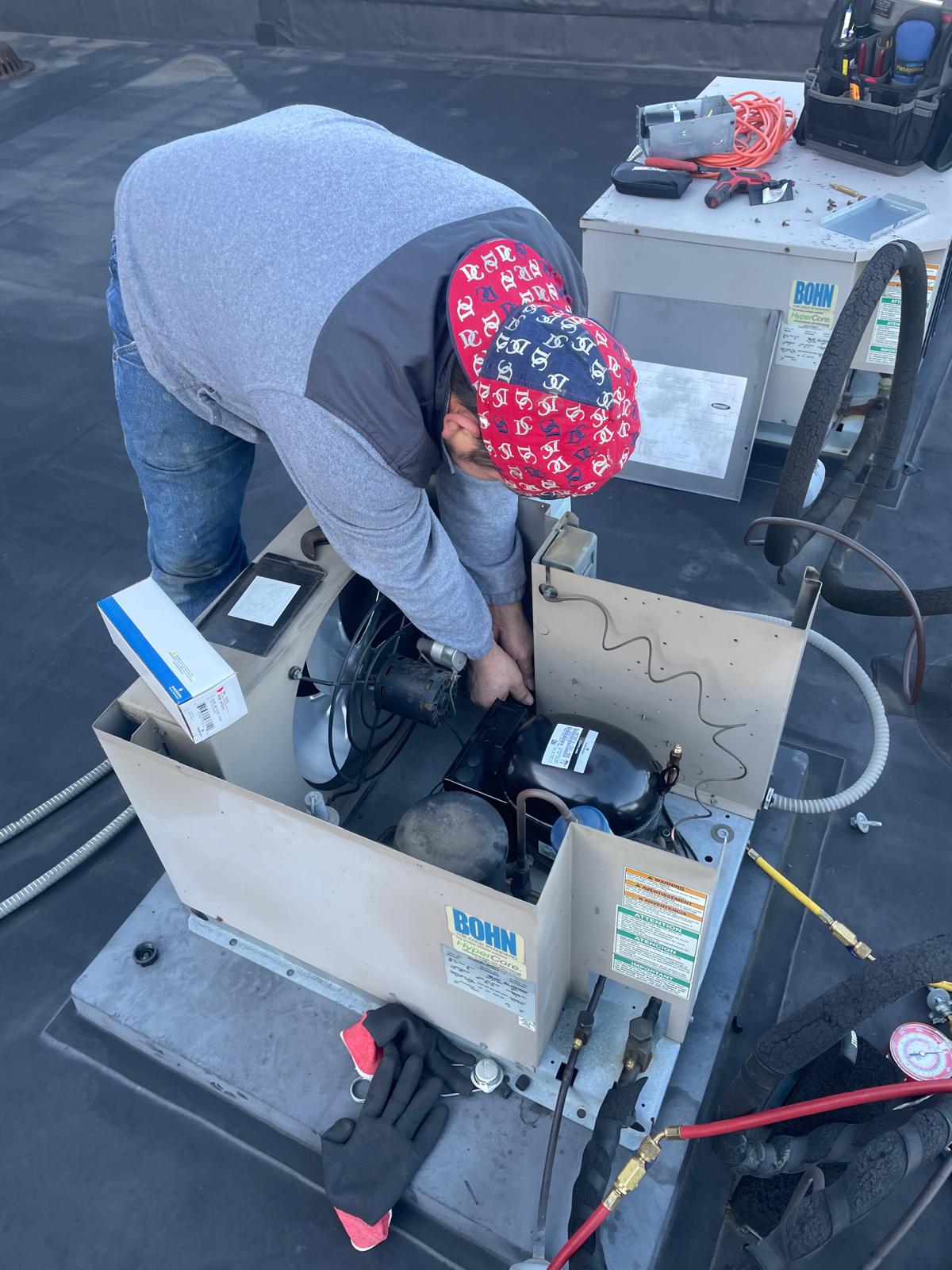
The compressor is the literal heart of your refrigeration system. It pumps the refrigerant, creating the cooling effect. When it fails? Game over for that unit. You’ll usually hear it first – loud knocking, grinding, screeching noises that sound expensive (because they are). Then, silence and rising temperatures. A compressor failure often means a significant repair or full replacement. Cost? Yeah, let’s just say it’s not cheap. But letting it go means zero cooling.
- Why It’s an Emergency: It means a specific unit (reach-in, walk in cooler, freezer) is completely down. If it’s your only low-temp freezer holding $$$$ in product? Nightmare fuel. Urgent commercial freezer repair is essential.
- What We See: Failure often stems from electrical issues, prolonged low refrigerant (see #2!), lack of maintenance, or just old age and wear. Sometimes it’s a “hard start” killing it slowly.
- The Pavel Solution: We diagnose why it failed (crucial to prevent the next one!). Sometimes it’s repairable, often it’s replacement time. We source quality compressors and get them installed fast. Got a compressor sounding like a dying dinosaur? Don’t wait for the final roar. Call Pavel for commercial fridge repair or freezer rescue STAT. We know downtime hurts.
4. The Thermostat Tango: Malfunctioning Controls (AKA: The Temperature Rollercoaster)
Lost in the (Cold) Sauce: When Controls Go Rogue
Ever find your walk-in freezer feeling suspiciously… balmy? Or your prep fridge frosting everything solid? Blame the brains of the operation: the thermostat or electronic control system. When these go haywire, your units can freeze product solid, dangerously warm up, or cycle on and off erratically – wasting energy and ruining food. It’s frustrating because the compressor might be fine, but the signals are all wrong. Talk about a wild ride nobody ordered!
- Why It’s an Emergency: Consistent, safe temperatures are non-negotiable for food safety. Health inspectors love writing violations for this. Also, inconsistent temps ruin product quality (soggy lettuce, icy dairy? No thanks).
- What We See: Faulty sensors, corroded wiring, fried control boards, or just plain old miscalibration. Common after power surges.
- The Pavel Calibration: We don’t just guess. We test sensors, check wiring, diagnose control boards, and recalibrate or replace components to get your temps rock-solid reliable. Is your fridge having mood swings? Get precise restaurant refrigeration repair from Pavel – because guessing games are for carnival booths, not your kitchen.
5. The Walk-In Wobble: Critical Walk-In Cooler/Freezer Breakdowns (AKA: The Giant Ice Cube Melting… or Not)
When the Big Box Breaks: Walk-In Woes
Your walk in cooler or freezer is the workhorse, holding the bulk of your precious inventory. When it fails, the scale of the emergency is massive. We’re talking hundreds or thousands of dollars in product at immediate risk. Whether it’s a failed evaporator fan, a busted door gasket letting cold air escape, a clogged drain causing ice buildup, or a full system failure (back to #1!), the impact is huge. Walk in refrigerator repair needs speed and expertise specific to these big units.
- Why It’s an Emergency: The sheer volume of product at risk makes this a top-tier crisis. Temperature recovery in a large space takes time, so every minute of downtime is critical.
- What We See: Failed fans are common (that humming stops, temps rise fast). Iced-up evaporator coils (often from drain issues or defrost problems) are frequent flyers. Door gasket failures are sneaky energy drainers and temp destabilizers.
- The Pavel Big Unit Expertise: Commercial walk in cooler repair is a specialty. We have the tools, parts, and know-how for these complex systems. From replacing gaskets to thawing and clearing ice dams, fixing fan motors, or tackling major component failures, we get your big box back online fast. Your walk-in crashing is a five-alarm fire. Pavel Refrigerant Services has the heavy-duty gear and know-how nearby to respond. Don’t try to MacGyver this one – call the pros!
Your Emergency Lifeline: Why Proximity & Expertise Matter (Especially Near Me!)
Let’s cut to the chase: when your fridge dies on a Friday night before a holiday weekend, you don’t have time to call someone three states away. You need help near me, and you need it FAST. That’s the advantage of a local specialist like Pavel Refrigerant Services right here in Montgomery County. We understand the unique pressures of urban kitchens in Washington DC, Arlington, Silver Spring, Wheaton, and surrounding areas. Traffic? We know the back routes. Common local issues? We’ve seen them a thousand times. Permit quirks? We navigate them daily.
Bold Truth: Trying cheap fixes or waiting “to see if it fixes itself” during a refrigeration emergency is like putting a band-aid on a burst pipe. It always costs more in the long run – in lost product, wasted energy, emergency service prices, and lost customer trust.
The Smart Move? Be Prepared:
- Know Your Lifeline: Save our number! Pavel Refrigerant Services is your nearest expert for commercial refrigeration repair and commercial refrigeration maintenance.
- Invest in Maintenance: Seriously, it’s the best insurance. Regular check-ups catch small issues (like those pesky leaks or wearing fans) before they become heart-stopping, wallet-emptying emergencies. Ask us about maintenance plans!
- Don’t Panic, But Do Act Fast: When disaster strikes, take a deep breath (okay, maybe two), then call us immediately. The faster we get there, the more we can save – your food, your money, your sanity.
FAQs: Your Burning Commercial Refrigeration Emergency Questions, Answered
-
Q: My reach-in fridge feels warm! Is this an emergency? Should I call someone near me right now?
- A: Yes, treat it as urgent! A warm fridge means food is entering the danger zone (40°F+). Check basics first: Is it plugged in? Is the thermostat set correctly? Is the condenser coil clogged with dust (give it a quick clean if safe)? If it’s still warm after 30 minutes, or if it’s a critical unit like a meat fridge, call for commercial fridge repair immediately (like, right now!). Don’t risk spoilage or safety. Pavel offers rapid response for exactly this.
-
Q: I heard a loud bang from my walk-in freezer, and now it’s not as cold. How bad is this? What’s the likely cost?
- A: That sounds serious, potentially a compressor failure (#3) or a major component blowing. This is absolutely an emergency. Turn off the unit if safe (to prevent further damage), move critical product to another cooler if possible (quickly!), and call for commercial walk in cooler repair without delay. The cost depends on the exact failure (compressor? fan motor? electrical issue?), but expect a significant repair bill. Prompt action minimizes product loss, which is often the biggest cost. We provide upfront estimates before any work.
-
Q: My cooler seems to be running constantly and my energy bill is insane. Is this an emergency, or can it wait?
- A: While maybe not a “food spoiling this second” emergency, it’s a cost emergency and a warning sign of a bigger problem brewing (like a refrigerant leak #2, failing compressor #3, or control issue #4). Ignoring it will lead to a more catastrophic (and expensive) failure soon. Call for commercial refrigeration service ASAP to diagnose the issue. Fixing it now saves you money on your bill and prevents a future crisis. Maintenance is key!
Wrapping It Up (Before Your Ice Does!)
So, there you have it – the top 5 gut-wrenching, profit-crushing commercial refrigeration emergencies we battle daily in urban kitchens. It’s not glamorous work, but hey, someone’s gotta keep the cold flowing and the salmonella at bay! We’ve built Pavel Refrigerant Services on being the reliable, fast, expert team you need when the chill disappears. We’re your closest neighbors in the refrigeration rescue business across Montgomery County.
Remember, preparation is power. Know the signs. Have our number handy (seriously, stick it on the walk-in door!). And invest in a little TLC with regular maintenance – it’s way cheaper than an emergency call at midnight. But when disaster does strike? Don’t freeze up (pun intended, and yeah, we know it was bad). Pick up the phone and call Pavel. We’ll be there faster than you can say “melted ice cream.” Let’s keep your kitchen cool, your food safe, and your stress levels low. Talk soon! (Hopefully not at 3 AM, but if it is… we’re still here).
People Also Ask
The most expensive repair on a refrigerator typically involves the sealed system, specifically a failed compressor or a refrigerant leak. Replacing a compressor is labor-intensive and requires specialized equipment to recover, evacuate, and recharge the refrigerant. A leak in the evaporator or condenser coils can also be costly, as it often involves dismantling the unit to access the hidden coils. For residents in Washington D.C. and Silver Spring, high humidity can accelerate corrosion on coils, leading to leaks. For more details, see our internal article How Humidity Impacts Metro Area Refrigeration Systems. At Pavel Refrigerant Services, we recommend annual maintenance to catch these issues early, as a sealed system failure can often cost more than replacing the appliance itself.
For commercial refrigeration units, industry standards recommend professional servicing at least twice a year. This biannual schedule, typically every six months, helps ensure peak efficiency and prevents costly breakdowns. A thorough inspection should include checking refrigerant levels, cleaning condenser coils, verifying door seals, and testing thermostat accuracy. More frequent service may be needed for high-use units in busy kitchens or during warmer months. To determine if a specific issue warrants a repair or full replacement, refer to our internal article titled How Can You Determine Whether An Item Should Be Repaired Or Replaced?. Following a consistent maintenance plan extends equipment lifespan and maintains food safety compliance.
For commercial refrigeration systems, the Environmental Protection Agency (EPA) mandates that any system containing 50 or more pounds of refrigerant must be repaired when the annual leak rate exceeds 30 percent. This threshold is a critical compliance requirement under the Clean Air Act. If a leak is detected above this rate, you typically have 30 days to complete the repair or initiate a retrofit or retirement plan. Regular maintenance and leak checks are essential to avoid penalties and reduce operational costs. For more detailed guidance on system upkeep and compliance, our internal article Commercial Refrigeration Repair provides a thorough overview of best practices and regulatory steps.
A commercial fridge that is not cooling enough often points to a dirty condenser coil, a faulty evaporator fan, or a refrigerant leak. The condenser coil, usually located at the bottom or back of the unit, can become clogged with dust and grease, preventing heat from dissipating. This forces the compressor to overwork and can lead to failure. For businesses in the DMV area, regular maintenance is critical due to high humidity and dust levels. If the coils are clean but the airflow is weak, the evaporator fan motor may be failing. Another common cause is a low refrigerant charge, which indicates a leak that requires professional repair. For a deeper look into these issues, our internal article 'Solving Common Compressor Failures In Maryland Industrial Systems' is available at Solving Common Compressor Failures In Maryland Industrial Systems. Pavel Refrigerant Services recommends scheduling a professional inspection to diagnose the root cause before the compressor is damaged.