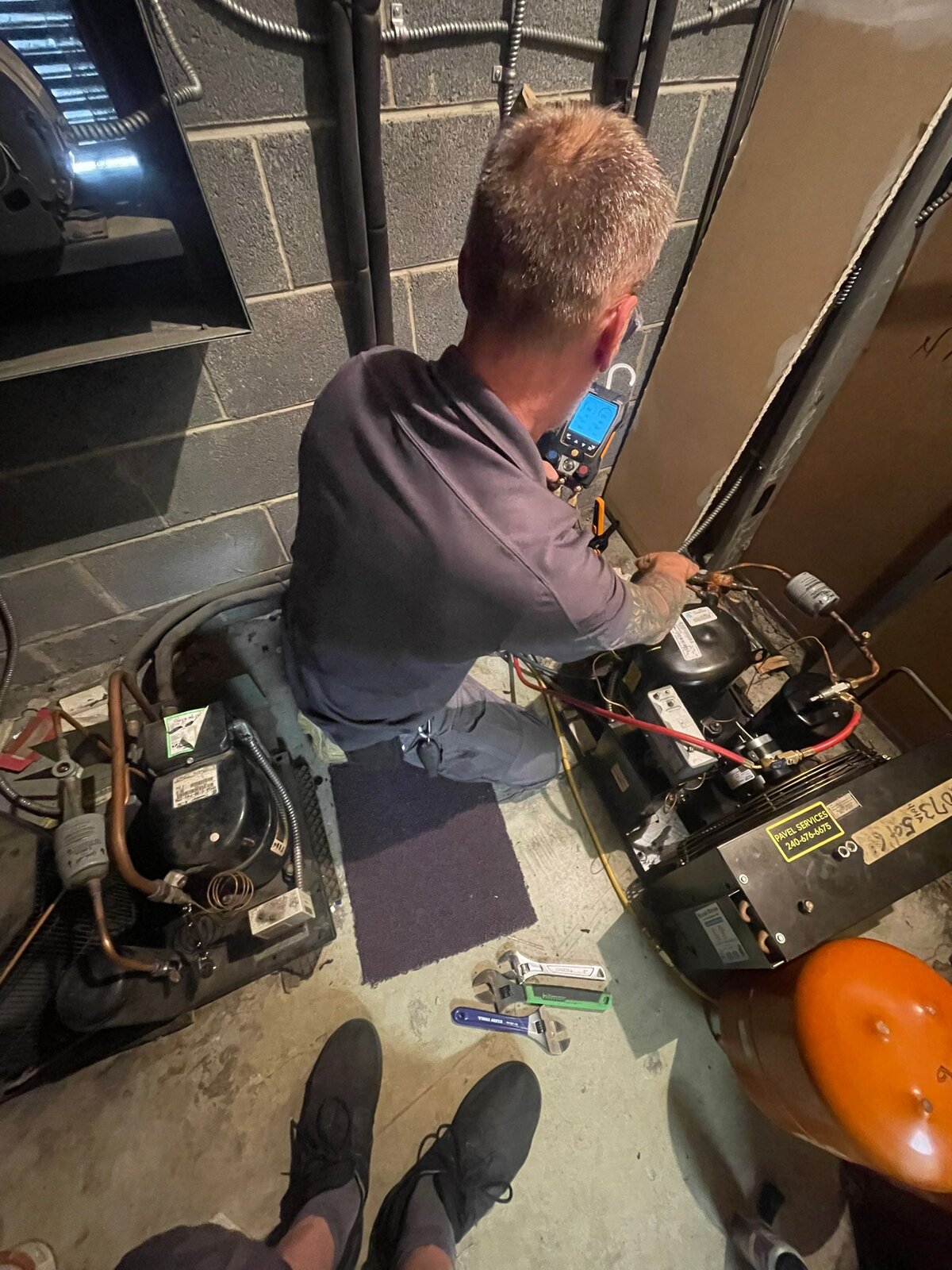
Key Takeaways: Retrofitting your old walk-in cooler with modern LED lighting and smart controls isn’t just about swapping bulbs. It’s a system upgrade that cuts energy bills by up to 70% on lighting, reduces heat load on your compressor, and gives you operational control you never had. The real challenge in older Maryland buildings is navigating the existing wiring, managing refrigerant lines, and ensuring the new system doesn’t void your cooler’s warranty or create new points of failure.
We’ve seen the inside of hundreds of walk-ins across Silver Spring and Baltimore, from bustling restaurant kitchens in Rockville to pharmaceutical storage in Columbia. The most common thing, hands down, is the persistent hum of an overworked compressor and the warm glow of hot, inefficient lighting that’s essentially a small heater running inside your cold box. Retrofitting the lighting is one of the highest-ROI moves you can make, but if you approach it like a simple home project, you’ll run into problems the guides don’t mention.
Table of Contents
What You’re Really Solving For (It’s Not Just The Light Bill)
When a restaurant owner or facility manager in Maryland asks us about LED retrofits, they’re usually quoting the energy savings they saw online. And that’s real—swapping from traditional T8 fluorescents or, heaven forbid, incandescent fixtures to LEDs can slash that portion of your energy use by 60-70%. But the secondary benefit is what moves the needle on your total system efficiency: heat reduction.
Every watt of energy going into an old light fixture becomes heat that your refrigeration system has to work to remove. In a sealed environment like a walk-in, that’s a direct tax on your compressor. Modern LEDs run so cool that you’re effectively reducing the cooling load itself. We’ve logged data showing compressors cycling 15-20% less frequently after a proper LED retrofit, which translates to longer equipment life and fewer service calls. In our humid Maryland summers, where ambient temperatures strain systems to their max, that’s a big deal.
The Hidden Snags in Older Maryland Walk-Ins
This is where the online tutorials and generic hardware store advice falls apart. Maryland, especially in older commercial corridors like downtown Silver Spring or Baltimore’s historic districts, has buildings with… character. And that character often means your walk-in cooler has some unique features.
The Wiring Can Be a Mystery. We’ve opened up conduits to find cloth-wrapped wire from the 1950s. The standard practice for decades was to run a single, unswitched circuit into the cooler for the light, often tied into the evaporator fan circuit. Adding a smart controller or motion sensor isn’t just about connecting wires; it’s about ensuring the existing circuit can handle the new low-draw electronics and that any modifications are up to current NEC code for damp, cold locations. Doing it wrong can be a fire hazard and will definitely fail a health department inspection.
Refrigerant Lines Are Not Your Friend. In many older installations, the electrical conduit and refrigerant lines were run together in a chase or are dangerously close. Drilling a new hole for a sensor wire or a new fixture mount without knowing exactly what’s behind that interior panel is a great way to cause a $2,000+ refrigerant leak. We always use a borescope camera before any penetration in a cooler we haven’t worked on before. It’s a lesson learned the hard way early in our business.
Condensation is the Silent Killer. Walk-ins cycle between cold and, during defrost cycles or when the door is open, warmer humid air. This creates condensation. Standard LED fixtures or wire nuts that aren’t specifically rated for damp, cold environments will corrode and fail. We’ve been called to jobs where a “cheap DIY LED job” lasted 4 months before flickering out because moisture wicked into the connections. The fixtures need a proper IP (Ingress Protection) rating, typically IP65 or higher, to be reliable.
Choosing Hardware: Beyond the Lumens
You can’t just buy any “utility LED” and throw it in. The environment demands specific gear.
Fixture Type Matters. We generally recommend vapor-tight LED strips or panels over retrofitting LED tubes into old fluorescent housings. Why? The sealed fixture handles condensation better, provides more even light distribution (no dark spots over prep tables), and is easier to clean. For the curious, the U.S. Department of Energy has a solid primer on commercial LED technology that explains efficacy ratings.
Color Temperature is a Food Safety Issue. That cool, blue-ish 5000K light might look “bright” in the showroom, but it makes red meat look gray and unappetizing. For food service, we almost always specify 3000K to 3500K (warm white to neutral white). It provides excellent visibility without distorting food color, which is crucial for staff identifying product quality and freshness.
Smart Controllers: The Real Game Changer. This is where you go from efficient to intelligent. A basic motion/occupancy sensor is good, but a full smart controller with temperature logging and remote alerts is better. It lets you see how often staff are in and out, alerts you if lights stay on (meaning a door might be ajar), and can even integrate with some refrigeration systems. For a facility manager overseeing multiple sites, being able to check the status of a cooler in Bethesda from your phone in Annapolis is a peace-of-mind upgrade.
The Professional vs. DIY Decision Matrix
This is the heart of it. When can you handle it, and when should you call a pro like us? Let’s break it down honestly.
| Consideration | DIY Approach | Professional Retrofit |
|---|---|---|
| Upfront Cost | Lower. You pay for parts only. | Higher. Includes labor, expertise, and often a warranty. |
| Time & Disruption | Your staff’s time, multiple trips to suppliers, potential operational downtime if you hit a snag. | Scheduled, minimized downtime. Team is in and out, often after hours. |
| Risk Factor | High. Risk of voiding cooler warranty, causing refrigerant leaks, electrical code violations, or moisture-related failures. | Low to None. Liability, permits, and code compliance are handled by the contractor. |
| Long-Term Outcome | Unpredictable. May work fine, may fail in 6 months, may create a new problem. | Predictable. System designed for the environment, with documented performance and support. |
| Best For… | Very new, simple coolers where you have clear electrical diagrams and high confidence in sealing penetrations. | Older coolers (10+ years), complex wiring, historic buildings, or when you need integrated smart controls and data. |
The truth is, for most businesses in older Maryland buildings, the professional route saves money in the long run by avoiding one major mistake. We recently replaced an entire self-installed system for a cafe near Wheaton Regional Park; the owner’s well-intentioned install led to a short that took out the thermostat, spoiling thousands in inventory. The “savings” evaporated overnight.
The Local Maryland Context: Climate, Codes, and Common Sense
Our weather pattern—swampy summers and cold winters—puts unique stress on refrigeration systems. A retrofit done in July has to account for max humidity; one done in January must account for condensation freezing within fixtures if not properly sealed. Montgomery County and the State of Maryland also have specific commercial energy codes that apply to retrofits of this scale. A professional will pull the necessary permits, which isn’t just red tape—it’s an extra pair of eyes ensuring the work is safe and insurable.
Furthermore, in our local market, we see a lot of walk-ins in tight basement spaces or on uneven slabs. Accessibility matters. A job in a cramped basement kitchen off Georgia Avenue is a puzzle of working around existing infrastructure that a YouTube video filmed in a warehouse won’t prepare you for.
When A Retrofit Might NOT Be The Right Move
It’s not a universal solution. If your walk-in cooler’s refrigeration system is on its last legs (constantly running, high superheat, frequent service calls), pouring money into a lighting retrofit is like putting new tires on a car with a blown engine. Address the major system issues first. Similarly, if you’re planning a full kitchen remodel or cooler replacement in the next 12-18 months, it’s better to bundle the new lighting into that larger project for a cohesive design and installation.
The Bottom Line: Light As A System, Not An Accessory
Thinking of lighting as a standalone component is the old way. In a modern, efficient commercial kitchen, lighting is an integrated part of the refrigeration and energy management system. A successful retrofit isn’t measured the day it’s turned on; it’s measured on your next quarterly power bill, in the reduced frequency of your service contracts, and in the confidence that your product is stored under reliable, consistent conditions.
For Maryland business owners, the path forward is an assessment. Start by logging how many hours a day those lights are actually on (you’ll likely overestimate). Check your utility bills for the demand charges. Then, get a professional evaluation that looks at the whole picture—the wiring, the age of the cooler, the placement of refrigerant lines—not just a quote to swap fixtures. The goal isn’t just to install LEDs; it’s to permanently remove a source of cost, heat, and uncertainty from your daily operations.
People Also Ask
Lighting sources must be protected to prevent physical and chemical contamination of food. Use shatter-resistant bulbs or install protective shields or diffusers over all fixtures in storage, prep, and serving areas. This prevents glass fragments from falling into exposed product if a bulb breaks. Additionally, choose appropriate lighting intensity for each zone, but avoid excessive heat that can accelerate spoilage. Regularly inspect fixtures for cracks, dust buildup, or loose fittings, and replace any damaged parts immediately. For open food areas, LED or fluorescent tubes with safety sleeves are ideal. If an incident occurs, discard any food that may have been exposed. At Pavel Refrigerant Services, we recommend integrating these safeguards into your routine sanitation checks to maintain compliance and safety.
The Pepco Energy Savings for Business program offers commercial customers in the Washington D.C. and Silver Spring area financial incentives to upgrade to energy-efficient equipment. This typically includes rebates for HVAC systems, lighting, and refrigeration units, which can significantly offset the upfront cost of replacing older, inefficient models. For businesses in the DMV, this is a practical way to reduce operational expenses and lower carbon footprints. When planning an upgrade, ensure your contractor is familiar with Pepco’s specific application deadlines and pre-approval requirements. At Pavel Refrigerant Services, we often guide local clients through these rebate processes, helping them maximize savings on commercial refrigeration projects while ensuring compliance with utility standards.
BGE (Baltimore Gas and Electric) offers several energy efficiency programs for homes and businesses in Maryland, including rebates for HVAC upgrades, smart thermostats, and insulation. For refrigerant-related services, note that BGE does not directly handle refrigerant recovery or reclamation, but their rebates often require a licensed contractor to perform the installation. If you are in the Washington D.C., Silver Spring, or DMV area, Pavel Refrigerant Services can help you identify eligible equipment and ensure proper refrigerant handling, which is a key part of maintaining system efficiency. Always check current BGE program terms, as incentives change seasonally and may require pre-approval before purchase.