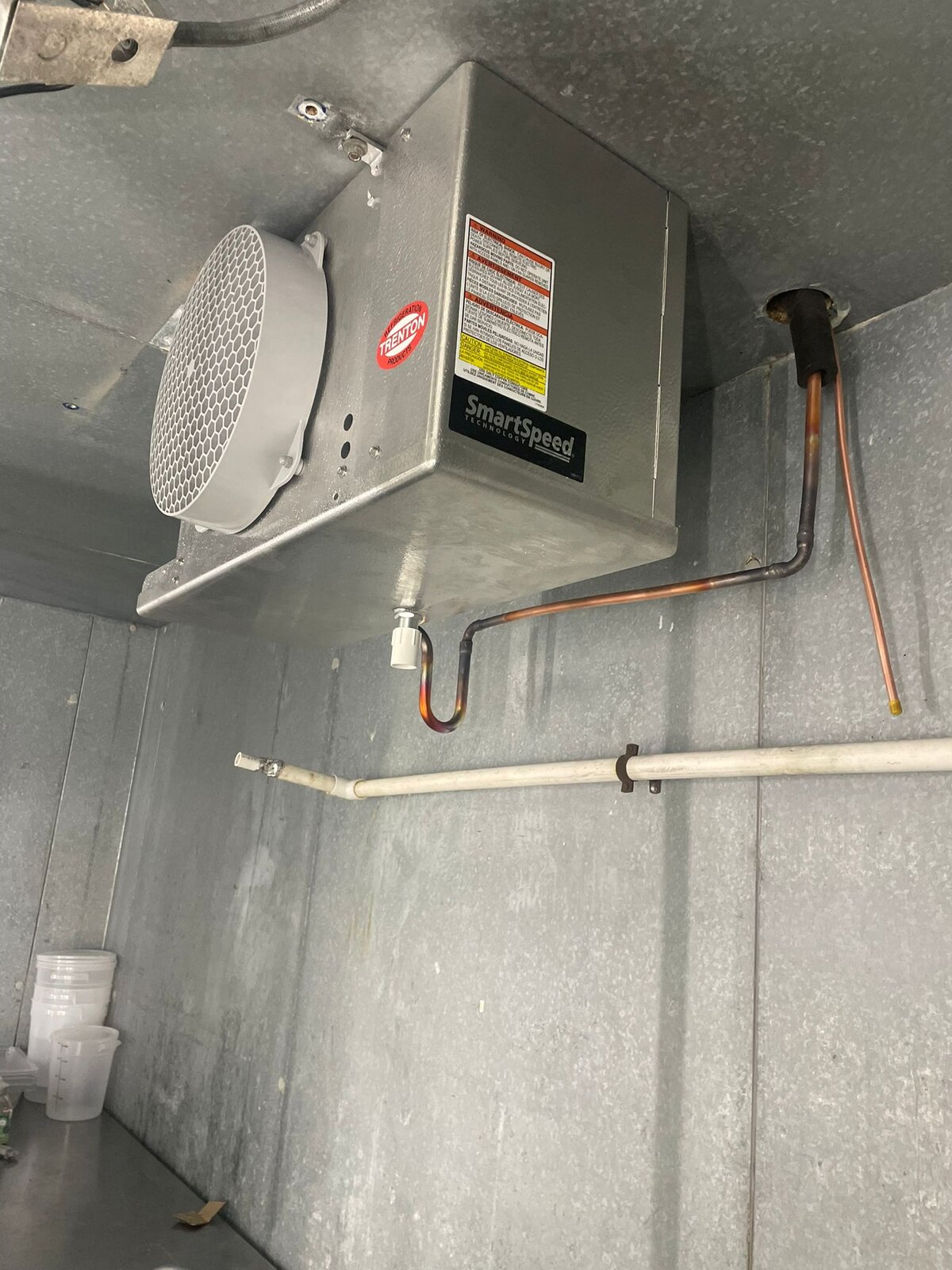
Alright, let’s have a real talk about something that keeps us up at night: refrigerant leaks. We’ve all been there. You walk into the mechanical room, and something just feels… off. Maybe the compressor is cycling too frequently, or there’s a faint, sweet chemical smell you can’t quite place. Your stomach sinks because you know what’s coming next: a drop in pressure, a spike in energy bills, and a race against the clock to find the problem before it finds your wallet.
Here in Maryland, where our industries—from food processing in Washington County to pharmaceutical storage in Montgomery County—rely so heavily on industrial refrigeration, a leak isn’t just an inconvenience. It’s a full-blown operational crisis. It threatens product integrity, skyrockets operational costs, and let’s be honest, dealing with the EPA isn’t anyone’s idea of a good time.
But what if we could change the narrative? What if, instead of reacting to leaks, we could anticipate and prevent them? That’s the world we want to live in, and it starts with understanding the smart, modern leak detection solutions available to us right here in our backyard.
Why We Can’t Afford to Ignore the Drip-Drip-Drip
Let’s be blunt. Ignoring a potential refrigerant leak is like ignoring a check engine light because the radio still works. Sure, everything might seem fine on the surface, but underneath, you’re brewing a perfect storm of problems.
First, there’s the financial drain. Refrigerant is liquid gold. A single leak can pour thousands of dollars literally into thin air. And your system has to work overtime to maintain temperature, which means your energy bills look more like a phone number. IMO, if you’re looking to cut operational costs, fixing leaks is the lowest-hanging fruit you’ll find.
Then, there’s the environmental impact. Most of these gasses have a global warming potential that makes CO2 look like an amateur. We have a responsibility to manage our systems responsibly, not just for compliance, but because it’s the right thing to do.
Finally, and most critically, there’s system reliability. A low charge causes excessive wear and tear on your compressors and other components. That small leak today could be the reason you need a complete commercial refrigeration repair tomorrow. It’s not just about the leak itself; it’s about the catastrophic failure it can cause down the line.
The Arsenal: Modern Leak Detection Tools of the Trade
Gone are the days of just slapping some soapy water on a joint and hoping for bubbles (though we admit, that method still has its place in a pinch). Today, we have a suite of high-tech tools that make finding leaks more like a science experiment and less like a guessing game.
We rely on a few key technologies to pinpoint problems with precision:
- Electronic Leak Detectors: These are our go-to Sherlock Holmes magnifying glasses. They sniff out refrigerant molecules in the air with incredible sensitivity. The good ones can differentiate between refrigerants and false positives, which is a lifesaver in a messy mechanical room.
- Ultrasonic Detectors: This is our favorite tool for the really tricky leaks. Instead of detecting the gas itself, these devices listen for the high-frequency sound a pressurized leak makes. It’s perfect for finding leaks in noisy environments or from a distance. It’s like having superhero hearing.
- Ultrasound Imaging Cameras: This is the next-level, futuristic stuff. These cameras literally allow you to see the sound of a leak on a screen. It’s incredibly effective for scanning large areas like warehouse ceilings or hard-to-reach evaporator coils quickly. The price on these has come down, making them a fantastic investment for serious preventive programs.
- Dye Injection: For persistent, phantom leaks that are impossible to find, we sometimes inject a fluorescent dye into the system. The dye circulates and escapes with the leak, and then we hit the area with a UV black light. The leak glows like a neon sign, showing us exactly where the problem is.
Here’s a quick breakdown of how these tools stack up:
| Technology | Best For | Pro Tip |
|---|---|---|
| Electronic Detectors | Pinpointing exact leak locations on joints, valves, and components. | FYI, these require regular calibration to stay accurate. Don’t trust a dusty detector from the back of the van! |
| Ultrasonic Detectors | Finding leaks in noisy areas, from a safe distance, or in hard-to-reach spots. | Perfect for preliminary scans before bringing in more precise tools. |
| Ultrasound Imaging Cameras | Rapidly scanning large areas like freezer ceilings or production lines. | A bit of an investment, but it saves countless hours of labor on large systems. |
| Fluorescent Dye | Intermittent leaks or systems that have been a persistent problem. | Make sure to use a dye that’s compatible with your refrigerant and oil to avoid causing any damage. |
Building Your First Line of Defense: A Proactive Maintenance Plan
Finding a leak is one thing. Preventing the mad scramble is another. The real goal is to stop leaks before they start. That’s where a solid partnership with a great commercial refrigeration service company comes in.
A proactive commercial refrigeration maintenance plan is your best insurance policy. It’s not just an expense; it’s a strategic investment that pays for itself. This includes:
- Regular Inspections: Scheduled visits where a tech visually inspects all components, checks fittings, and gives the system a once-over. Sometimes, you can spot seeping oil or corrosion before it becomes a full-blown leak.
- Preventive Parts Replacement: Things like schrader valve cores, gaskets, and O-rings have a service life. proactively replacing them during scheduled downtime is far cheaper than an emergency call on a holiday weekend.
- System Performance Monitoring: Tracking pressures, temperatures, and amp draws over time can reveal a slow leak long before it triggers a low-pressure alarm.
This is where working with a local expert like Pavel Refrigerant Services here in Montgomery County really shines. Why? Because when we’re your partner, we get to know your specific system—its quirks, its history, and its weak points. We’re not just some random tech from a national outfit; we’re your nearest expert ally. Whether you’re dealing with a critical industrial refrigeration repair or just need a tune-up, having a team nearby in Wheaton or Silver Spring means faster response times and familiar faces who know your facility.
When Disaster Strikes: Your Game Plan for a Suspected Leak
Okay, let’s get practical. You suspect a leak. What’s the playbook?
- Don’t Panic. Take a deep breath. You’ve got this.
- Assess the Situation. Is the alarm screaming, or is it a subtle performance issue? Is product temperature at risk? If so, move valuable inventory if possible.
- Call the Pros. This is not a DIY project. Refrigerant handling requires EPA certification and specialized equipment. You need a team that specializes in commercial freezer repair and commercial fridge repair on an industrial scale. A quick online search for “commercial refrigeration repair near me” might bring up a lot of options, but you want the specialists, not the generalists.
- Contain the Problem. While you wait for the techs, ventilate the area if it’s safe to do so.
Having a trusted number on speed dial—like, say, Pavel Refrigerant Services—turns a crisis into a manageable situation. They handle everything from the emergency walk in cooler repair to the full leak detection, repair, and recharge, all while ensuring EPA compliance. They’re a great resource for our friends in Washington D.C., Arlington, and across Maryland.
Your Questions, Answered
How often should I have my industrial system checked for leaks?
We recommend a formal leak check as a key part of at least two of your four annual maintenance visits. For older systems or those using high-pressure refrigerants, you might want to bump that up to quarterly. It really depends on the critical nature of your operation. A facility storing millions in product can’t afford the same risk as a smaller operation.
What’s the real cost of a leak beyond just the refrigerant?
Ah, the hidden cost! Let’s break it down:
- Refrigerant Loss: The direct cost of the gas itself.
- Energy Penalty: A system with a low charge runs longer and harder, increasing energy consumption by 20% or more.
- Component Failure: Running a system low on charge can lead to compressor burn-out, which is a five-figure repair.
- Product Loss: If temperatures rise and product spoils, that’s a direct hit to your bottom line.
- Regulatory Fines: EPA fines for negligent releases are no joke.
Can’t I just keep adding refrigerant until I have time for a repair?
Absolutely not. This is a huge violation of EPA regulations and is terrible for your system. It’s also incredibly expensive and wasteful. Think of it like putting a bandaid on a broken pipe. You’re just postponing the inevitable disaster and making it more expensive. The only correct answer is to find the leak and repair it properly.
Let’s Keep Your Systems Tight and Your Mind at Ease
At the end of the day, managing an industrial refrigeration system is a big responsibility. But it doesn’t have to be a terrifying one. By embracing modern leak detection technology and partnering with a proactive commercial refrigeration service provider, you can swap panic for peace of mind.
Remember, the goal isn’t to be leak-free by luck; it’s to be leak-resistant by design. It’s about having a plan and a partner you can count on. So, whether you’re in need of restaurant refrigeration repair or a full-scale industrial refrigeration repair, do yourself a favor and build a relationship with a local expert. For those of us in the area, having a team like Pavel Refrigerant Services as your closest line of defense means you’re always covered.
Now, who’s ready to go check those schrader caps? 🙂
Related Articles
Emergency Commercial Refrigeration Repair Washington, DC | 24/7 Walk-In Cooler & Freezer Service
Solving Common Compressor Failures In Maryland Industrial Systems
People Also Ask
For industrial refrigeration systems in Maryland, proactive water leak detection is critical to prevent equipment corrosion, mold growth, and costly water damage. The best solutions integrate multiple technologies. Electronic cable sensors are ideal for perimeter monitoring of mechanical rooms and under raised floors. For pinpoint accuracy under condensate pans or specific units, spot or probe sensors are highly effective. The most advanced systems utilize area monitoring with mesh network sensors that communicate wirelessly to a central controller, providing real-time alerts and location data. All systems should be integrated with building automation for immediate shutdown of water sources. Regular maintenance of drain pans and lines is the first defense. For immediate response to leaks causing refrigeration failure, our team provides expert service as detailed in Emergency Commercial Refrigeration Repair Washington, DC | 24/7 Walk-In Cooler & Freezer Service.
For Maryland industrial refrigeration facilities, seeking free leak detection solutions often involves leveraging utility rebate programs or manufacturer promotions. Many local utilities and environmental agencies offer incentives or free audits to help businesses identify and reduce refrigerant emissions, which can include advanced detection equipment or consulting services. The most effective long-term strategy, however, is investing in a robust, regular maintenance program with electronic leak detectors and ultrasonic technology to find even the smallest leaks early. Proactive leak management prevents costly refrigerant loss, reduces operational downtime, and ensures EPA compliance. For a deeper understanding of system vulnerabilities, we recommend reviewing our detailed resource, Solving Common Compressor Failures In Maryland Industrial Systems, which connects common failures to leak prevention strategies.
For industrial refrigeration systems in Maryland, the best leak detection solutions combine advanced technology with proactive maintenance. Electronic leak detectors (ELDs) using heated diode or infrared sensors are highly effective for pinpointing refrigerant leaks with precision, even in complex piping. Ultrasonic detectors are excellent for identifying pressure leaks by sound, especially in noisy environments. For larger systems, regular maintenance should include dye injection kits, which use UV light to reveal leaks over time, and bubble solutions for immediate visual checks on accessible joints. Implementing a scheduled inspection program with these tools is critical for compliance, preventing costly downtime, and minimizing environmental impact. For immediate response to leaks causing equipment failure, our team provides expert service detailed in Emergency Commercial Refrigeration Repair Washington, DC | 24/7 Walk-In Cooler & Freezer Service.