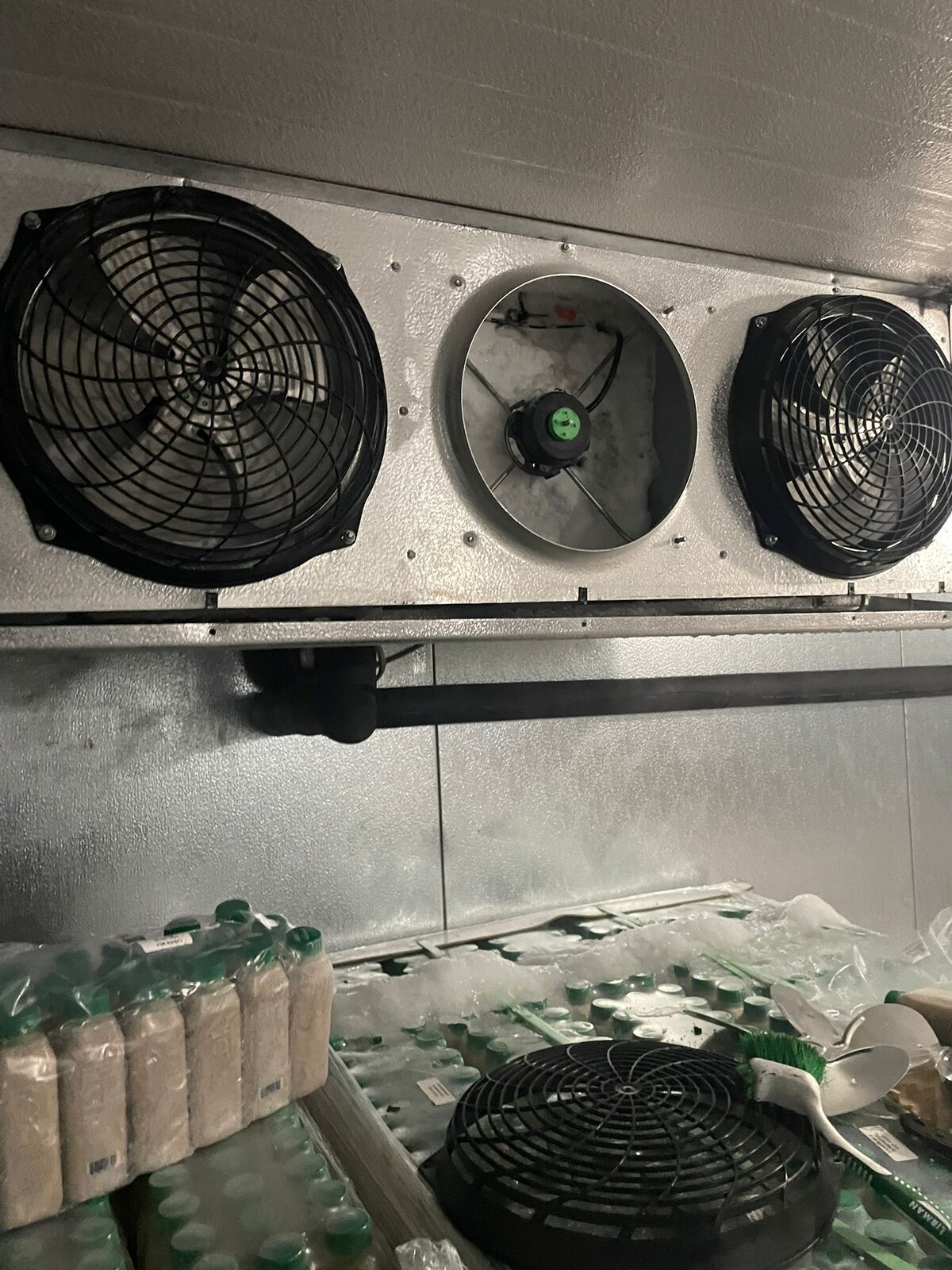
If you run a business long enough, you’ll eventually face that moment when the lights flicker, the hum of the refrigerators stops, and the air conditioning goes silent. It’s not a drill. It’s a summer power outage in the middle of a heatwave, and suddenly every decision you made about preparedness gets tested in real time.
We’ve been inside hundreds of commercial kitchens, retail stores, and small offices across Silver Spring, MD during these exact moments. What separates a business that reopens in a few hours from one that’s cleaning out spoiled inventory for days? Usually, it’s not luck. It’s having a plan that accounts for the things nobody thinks about until the ice cream starts melting.
Key Takeaways
- Your refrigeration system is the most vulnerable asset during an outage; most losses happen in the first four hours.
- A generator is not a set-it-and-forget-it solution; fuel storage and load management matter more than the unit’s wattage.
- The single best investment for most businesses is a hardwired automatic transfer switch paired with a monitoring system.
- Professional HVAC and refrigeration maintenance before summer reduces failure risk by roughly 40% according to industry data.
- Local building codes in Montgomery County require specific ventilation for backup fuel storage; ignoring this can shut you down faster than the outage itself.
Table of Contents
The Real Cost of Waiting Until It Happens
Most business owners we talk to assume a power outage is a short-term inconvenience. They picture a few hours, maybe a half-day. But the reality in our region is different. Summer storms in the DC metro area, particularly those rolling through from the northwest, can knock out power for 12 to 48 hours. Heat indexes hitting triple digits turn a minor disruption into a major loss event.
We once walked into a restaurant in downtown Silver Spring after a four-hour outage. The walk-in cooler had climbed from 38°F to 52°F. The owner thought the food was fine because the door stayed closed. It wasn’t. That single afternoon cost him over eight thousand dollars in product loss, plus a health department visit that flagged his temperature logs.
The mistake wasn’t the outage. It was the assumption that passive measures would save him.
Why Your Refrigerator Betrays You First
Commercial refrigeration systems are designed to maintain temperature under normal conditions, not emergency ones. When the compressor stops, the insulation in a walk-in only delays the inevitable. You might get two to four hours before food hits the danger zone above 40°F, and that’s only if the door stays shut the entire time.
We’ve seen people prop doors open thinking it helps circulate air. It doesn’t. It accelerates temperature rise by pulling in humid outdoor air. The better move is to keep everything closed and monitor internal temps with a wireless probe you can check from your phone.
The Ice Trick That Actually Works
If you know a storm is coming, fill clean five-gallon buckets with water and freeze them solid. Place one on each shelf of your reach-in coolers. When the power goes out, those blocks of ice act as thermal batteries, buying you an extra two to three hours of safe temperatures. It’s not a permanent fix, but it’s cheap and it works.
We’ve recommended this to a dozen delis and bakeries in the area. The ones who actually do it always thank us later.
Generators: The Good, The Bad, and The Overpriced
Let’s talk about generators honestly. There’s a lot of marketing noise out there. You don’t need a 50-kilowatt diesel unit bolted to a concrete pad unless you’re running a data center. For most small to mid-sized businesses, a properly sized portable generator with a manual transfer switch covers the essentials.
But here’s the part that gets overlooked: fuel management. Gasoline goes bad in about 30 days. If you fill five cans in May and the outage hits in August, half of that fuel might not start your generator. Stabilizer helps, but it’s not magic. Diesel lasts longer but requires different storage conditions.
We’ve had calls from owners who bought a generator, never tested it, and then couldn’t get it started when the power died. That’s a painful lesson in the middle of a 95-degree afternoon.
What to Actually Power
Prioritize your refrigeration and any medical or safety equipment. Lighting can be handled with battery-powered LEDs. Your point-of-sale system might run on a small UPS for an hour. Don’t waste generator capacity on air conditioning unless you have a massive unit and a fuel supply to match.
For most restaurants and retail stores in Silver Spring, a 7,000 to 10,000-watt generator running on propane or natural gas is the sweet spot. Propane stores indefinitely and doesn’t degrade.
The Automatic Transfer Switch: Worth Every Penny
We’ve seen too many businesses rely on extension cords running through doorways during an outage. That’s a tripping hazard, a fire risk, and it means you can’t secure your building properly. A hardwired automatic transfer switch solves this. It connects your generator to your electrical panel safely and legally.
Installation requires a licensed electrician and permits from Montgomery County. It’s not cheap, usually between $1,200 and $2,500 depending on your panel configuration. But when the power goes out at 2 AM and your cooler kicks back on automatically, you’ll understand why it’s worth it.
The Hidden Danger: Heat Buildup in Mechanical Rooms
This is something we see constantly. Businesses have their refrigeration compressors, electrical panels, and sometimes even their generator all crammed into a small mechanical room. When the power goes out during summer, that room becomes an oven. Even if your generator runs, the ambient temperature can cause equipment to overheat and shut down.
We worked with a convenience store in Takoma Park that lost a compressor because the mechanical room hit 120°F during a six-hour outage. The generator was running fine, but the heat tripped the thermal overload on the compressor. That repair cost more than the generator itself.
Make sure your mechanical spaces have passive ventilation or a dedicated exhaust fan that runs off the generator circuit. It’s a detail that matters.
When Professional Help Is the Only Answer
There’s a limit to what any business owner can handle alone. If your refrigeration system uses R-404A or R-452A refrigerant, and you suspect a leak during or after an outage, call a professional. Refrigerant handling requires EPA certification in the United States, and for good reason. Releasing these compounds into the atmosphere is illegal and harmful.
Similarly, if your generator fails to start or your transfer switch trips repeatedly, don’t keep resetting it. That’s how you burn out a compressor or start an electrical fire.
At Pavel Refrigerant Services in Silver Spring, MD, we’ve responded to enough post-outage emergencies to know that the first call is usually the cheapest one. Waiting until the temperature inside your walk-in hits 60°F only guarantees a total loss and a longer repair time.
What a Professional Check Includes
A pre-summer inspection should cover refrigerant levels, condenser coil cleanliness, fan motor operation, and thermostat calibration. It takes about an hour for a standard walk-in setup. Most of the failures we see during outages are pre-existing issues that were ignored because they weren’t causing problems yet.
The Regulatory Side You Can’t Ignore
Montgomery County has specific requirements for commercial food establishments regarding temperature monitoring and record-keeping. During a power outage, you are still expected to maintain logs. If you can’t prove that your food stayed below 41°F, health inspectors can require you to discard everything.
We’ve seen this happen. It’s not a fine. It’s a destruction order.
Invest in a digital temperature monitoring system that records data automatically. Some systems send alerts to your phone. They’re not expensive anymore, and they provide the documentation you need for insurance claims and health inspections.
Common Mistakes We See Repeatedly
People panic and open doors constantly. Every time you open a cooler door, the temperature spikes and recovery takes longer. Post a sign on each door during an outage: “Do Not Open Unless Absolutely Necessary.”
Another mistake is running a generator indoors or too close to a building. Carbon monoxide poisoning is real and kills people every year. Keep generators at least 20 feet from any structure, and never in a garage or basement.
We also see businesses skip the load test. They buy a generator, plug it in, and assume it works. Run it under full load for at least 30 minutes before you need it. That’s the only way to know if it can handle what you’re asking.
When a Generator Isn’t the Answer
Not every business needs a generator. If you operate a small retail shop with no refrigeration or critical equipment, battery-powered lights and a plan to close for the day might be sufficient. Generators require maintenance, fuel management, and noise management. Some commercial leases prohibit generator use due to noise ordinances or space constraints.
In those cases, consider a battery backup system for your point-of-sale and internet router. That keeps your credit card processing running for a few hours. For refrigeration, you might negotiate access to a neighboring business with backup power or invest in dry ice as a temporary measure.
Dry ice is effective but dangerous in enclosed spaces. It sublimates into carbon dioxide and can displace oxygen. Use it only in well-ventilated areas and never in a sealed walk-in cooler.
A Practical Table for Decision Making
| Scenario | Recommended Action | Estimated Cost | Risk Level |
|---|---|---|---|
| Outage under 2 hours, no refrigeration | Close and reopen | $0 | Low |
| Outage 2-6 hours, commercial refrigeration | Portable generator + transfer switch | $2,000-$4,000 | Medium |
| Outage 6+ hours, multiple coolers/freezers | Standby generator + auto transfer switch | $6,000-$15,000 | High |
| Outage with known refrigerant leak | Call technician immediately | $300-$1,000 service call | Critical |
| Outage during health inspection | Provide digital temp logs | $0 if prepared | High |
Final Thoughts on Staying Open When Everything Else Shuts Down
The businesses that survive summer outages aren’t the ones with the biggest budgets. They’re the ones that thought ahead about the small things: a bucket of ice, a tested generator, a clean condenser coil. They made a plan that accounted for human nature, like the temptation to open a cooler door just to check.
If you’re reading this and realizing you’re not ready, that’s fine. Most people aren’t. But the difference between a bad afternoon and a catastrophic loss is usually a single weekend of preparation. Check your equipment. Test your backup. Talk to someone who has done this before.
And if you’re in Silver Spring and the heat is already climbing, maybe call a professional before the storm hits. It’s cheaper than the alternative.
Related Articles
Safety Guidelines For Refrigerated Foods After A Power Outage
How To Protect Commercial Refrigeration During A Power Outage
Emergency Action Guide: Commercial Reach-In Freezer Warming Up Fast in Bethesda, MD
People Also Ask
During a summer power outage, your priority is preventing heat-related illness. First, keep refrigerator and freezer doors closed to preserve food; a full freezer can stay cold for up to 48 hours. Use battery-powered fans and seek the coolest room, ideally with shade. If the heat becomes unbearable, consider a public cooling center or a friend's home with power. Never use generators or charcoal grills indoors, as they produce deadly carbon monoxide. Unplug sensitive electronics to avoid damage from power surges when electricity returns. Drink plenty of water and wear light clothing. If you have a medical device requiring power, have a backup plan ready. For expert guidance on system recovery, Pavel Refrigerant Services can help you assess your cooling equipment after the outage.
A power outage can be stressful, but preparation is key. First, keep a flashlight and extra batteries within easy reach; avoid candles due to fire risk. Unplug sensitive electronics to prevent damage from power surges when the electricity returns. Keep your refrigerator and freezer closed to preserve food for up to 48 hours. For heating or cooling, designate one room to insulate with towels under doors. If you rely on medical devices, have a backup power plan. Finally, use a battery-powered radio for updates. For thorough inspections of your electrical systems after an outage, consider a professional check from Pavel Refrigerant Services to ensure everything is running safely.
Filling a bathtub with water before a power outage is a practical emergency preparedness step. It provides a reserve of water for essential uses, as electric pumps and municipal supply systems often fail without power. This stored water can be used for flushing toilets, basic hygiene, and cleaning. It is not intended for drinking unless you have a safe, potable source, as bathtub water may contain contaminants. For drinking, store bottled water separately. This simple measure ensures you maintain a functional water supply for sanitation during an outage, which is critical for health and comfort. For professional guidance on emergency systems, Pavel Refrigerant Services can offer advice on related home preparedness.
During a power outage, safety is paramount. First, use flashlights or battery-powered lanterns instead of candles to prevent fire hazards. Keep refrigerator and freezer doors closed to preserve food; a full freezer can keep items safe for up to 48 hours. Unplug sensitive electronics and appliances to avoid damage from power surges when electricity returns. Leave one light on to know when power is restored. If using a generator, operate it outdoors only, away from windows, to prevent carbon monoxide poisoning. For prolonged outages, consider a professional inspection of your HVAC system. Pavel Refrigerant Services recommends having a maintenance plan to ensure your equipment is ready for any grid disruption.
Summer power outages can cripple a business, especially when heat and humidity threaten your inventory, equipment, and employee safety. First, conduct a pre-season audit of your backup power systems, ensuring generators are fueled and tested. Second, create a contingency plan that prioritizes which circuits receive backup power, focusing on refrigeration and critical servers. Third, install surge protectors and uninterruptible power supplies to safeguard sensitive electronics from damaging power fluctuations when the grid returns. Fourth, establish a communication protocol to update staff and customers promptly via text or social media. Finally, document all spoiled goods and downtime costs for insurance claims. For complex commercial refrigeration failures, Pavel Refrigerant Services provides rapid emergency response to mitigate losses and restore your cold chain quickly.
When the power goes out during a storm, your first priority is safety. If you see downed power lines or flooding near your electrical panel, do not touch anything and call your utility company immediately. Unplug sensitive electronics like computers and TVs to prevent damage from power surges when electricity is restored. Leave one light switch on so you know when the power comes back. Keep refrigerator and freezer doors closed to preserve food for up to 48 hours. If you rely on medical equipment, have a backup plan ready. After the storm, if your system has tripped a breaker or shows signs of damage, a professional inspection is wise. Pavel Refrigerant Services can help assess any storm-related issues with your cooling systems once it is safe to do so.
A power outage in the DMV area can be a great excuse to unplug and reconnect. Instead of staring at a dead screen, break out board games, cards, or a jigsaw puzzle for some classic family fun. You can also use the quiet time for storytelling, playing acoustic instruments, or starting a handwritten letter to a friend. If it is safe, go outside for a stargazing session, away from city lights. For a cozy vibe, gather around flashlights or candles and share spooky tales. If the outage extends to your refrigeration, remember to keep the doors closed to preserve food. For any prolonged cooling issues, Pavel Refrigerant Services is ready to help once power is restored.