

Reviving the Heartbeat of Your Cooling System
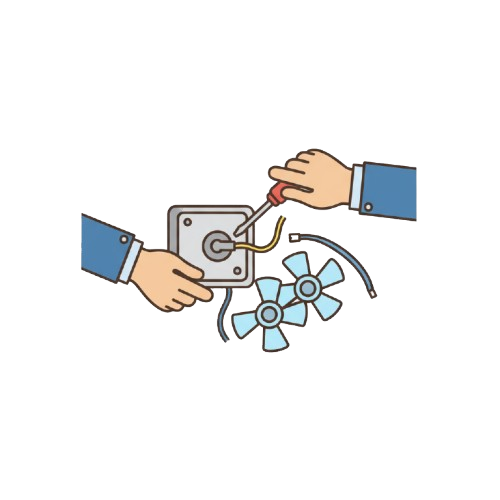
The effectiveness of any cooling system is pegged on the consistent speed of its fan motors and blades. Once this balance is disrupted, there is a weakening of airflow and efficiency reduces. Technological accuracy and mechanical experience are all that our technicians apply in every repair to get your system going in the right direction again. Starting with small modifications and complete parts replacement, every task is approached attentively and with uniformity.

Creating Smooth, Efficient Airflow That Endures
We are not just going to have your fans turning again, we are going to bring system harmony. Every repair is performance-tested, vibration-tested, and optimally airflow-tested to achieve durability. Be it commercial kitchens with heavy traffic or a cold-storage facility we have solutions that are designed to maximize circulation, minimize wear and keep your operation in optimal cooling conditions.


Diagnose Performance Irregularities
We examine noises, airflow, and motor speed to find issues.

Restore Mechanical Balance
We fix blades, clean, and test motors for optimal airflow.

Reinforce Structural Integrity
We secure mounts, tighten fittings, and replace parts for stability.

Validate Efficiency and Endurance
We finish repairs with testing to ensure cooling and durability.

We hired them to do a complete kitchen and two bathrooms renovation. They were extremely professional, kept us within budget, and finished early. The communication was excellent; they kept us updated daily, and the entire experience was stress-free. The workmanship is beautiful. Highly recommend this remodeling and construction company.


Skilled technicians diagnosing issues quickly and performing reliable repairs.

We hired them to do a complete kitchen and two bathrooms renovation. They were extremely professional, kept us within budget, and finished early. The communication was excellent; they kept us updated daily, and the entire experience was stress-free. The workmanship is beautiful. Highly recommend this remodeling and construction company.

They have great service They fix my walking refrigerator They got here on time and it worked great after the service they did to my restaurant refrigerator I recommend them to friends that has restaurants

Pavel was called on an emergency service on a Saturday morning and came out to fix a walk-in freezer that was recently installed at our restaurant. The freezer was icing over and the temperature was rising inside. Since this could not wait, he came out and identified the issue and fixed it properly. On that same night, he even came back to ensure the unit was working properly and holding deep-freezer temperatures. Pavel went above and beyond for our restaurant and we are very happy with his service. Our restaurant recommends him!

Our bar cooler wasn’t keeping temp and the guys from Pavel Refrigerant Services figured it out right away.
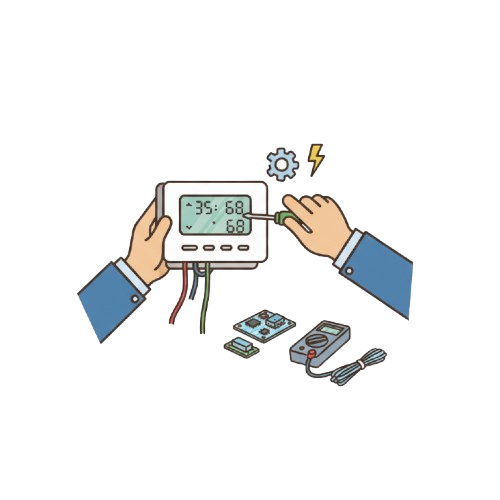
It turned out to be a thermostat issue which they repaired on the spot.
Quick service and solid work all around.

Had an issue with our commercial refrigeration system and these guys fixed it fast. Their quick service and great communication made a stressful situation super easy. Definitely sticking with them for future maintenance.

Had an issue with our commercial refrigeration system and these guys fixed it fast. Their quick service and great communication made a stressful situation super easy. Definitely sticking with them for future maintenance.

Got a refrigerant leak detected and repaired by Pavel’s team. They found the issue fast and made sure there were no other hidden problems. The service was smooth and the price made sense.

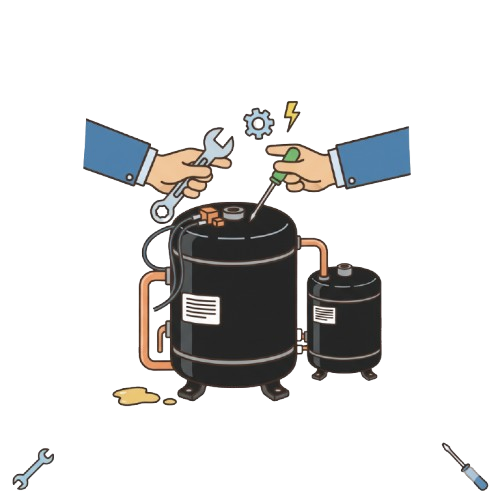
Our warehouse cooler needed compressor repair and Pavel’s crew handled it like pros. They showed up with all the appropriate equipment and didn’t waste any time. The pricing was fair and the system has been running flawlessly since.


Related Articles
People Also Ask
The decision to repair a fan depends on several factors. For a simple desk fan, a repair like replacing a capacitor or cleaning may be cost-effective if the unit is of good quality. For critical industrial fans in HVAC or refrigeration systems, repair is often essential to avoid costly downtime and is usually worthwhile. Key considerations include the age of the equipment, the cost of the repair versus a replacement, and the availability of parts. A systematic evaluation is crucial. For a detailed framework on making such decisions, please refer to our internal article, How Do You Decide Between Repairing Or Replacing A Machine?. This guide helps weigh long-term reliability and operational costs.
The cost to repair a single ceiling fan blade typically ranges from $10 to $50 for the replacement blade itself, with professional installation adding $50 to $150 in labor. The total average cost is often between $75 and $200. Factors influencing price include the fan's make and model (as blades are often brand-specific), whether it's a simple blade swap or requires balancing, and local labor rates. For a full set of blades, costs can be higher. It's often more economical to replace a single damaged blade rather than the entire fan. For safety and proper function, ensure any replacement blade is an exact match and consider hiring a qualified technician for installation, especially if electrical work or balancing is needed.
The cost to replace a fan motor in a refrigeration or HVAC system can vary widely, typically ranging from $200 to $600 or more for parts and labor. The final price depends on several key factors: the specific type of motor (e.g., evaporator fan, condenser fan), its accessibility within the unit, the brand and model of the equipment, and local labor rates. For commercial systems, costs can be significantly higher due to more powerful motors and complex installation. It is always recommended to obtain a detailed quote from a certified technician, as a proper diagnosis ensures the correct motor is replaced and that underlying issues, like electrical problems, are also addressed.
Yes, ceiling fan blades can often be repaired, but the feasibility depends on the damage. Minor issues like wobbling due to loose screws or slight warping can be corrected by tightening hardware, balancing the blades with a kit, or gently bending a warped blade back into shape. However, blades that are cracked, severely split, or have broken mounting points are a safety hazard and must be replaced. Using mismatched or damaged blades can cause excessive vibration, motor strain, and potential failure. For persistent operational issues, the problem may originate in the motor assembly. Our detailed guide on Fan Motor and Blade Repairs provides further insight into diagnosing and addressing related mechanical faults to ensure safe, efficient fan operation.
Replacing a 3-speed fan motor in a refrigeration or HVAC system is a common repair that requires technical skill. The process involves safely disconnecting power, removing the fan blade and any housing, disconnecting the electrical wires (noting their positions for the different speed taps), and unbolting the old motor. The critical step is installing an exact OEM replacement or a compatible universal motor with matching specifications: voltage, horsepower, shaft size, rotation direction, and physical mounting. Properly securing the new motor, reattaching the blade with the correct set-screw tightness, and reconnecting the wires to the correct speed terminals is essential. After reassembly, always test each fan speed to ensure proper operation and airflow before restoring full power to the unit.
For fan motor repair in refrigeration or HVAC systems, it is crucial to contact a certified professional. A qualified technician can diagnose issues such as seized bearings, faulty capacitors, or winding failures. They will ensure the repair is performed safely, restoring proper airflow and system efficiency. Using an authorized service provider guarantees access to correct parts and adherence to manufacturer specifications. Always verify the technician's certifications and experience with your specific equipment type to avoid further damage and ensure reliable operation. For immediate service, consult local business directories or the manufacturer's website for approved repair agents in your area.
A seized fan motor in a refrigeration or HVAC system is a critical issue that requires immediate attention to prevent compressor failure. First, ensure the system is powered off completely. The seizure is often caused by a lack of lubrication, bearing failure, or debris accumulation. You can attempt to manually rotate the fan blade to check for binding. If it moves with difficulty, applying a specialized penetrating oil to the motor shaft may free it, but this is often a temporary fix. For a permanent repair, the motor typically needs to be replaced. Regular preventative maintenance, including cleaning and lubrication, is key to avoiding this problem. For a detailed guide on this specific repair process, refer to our internal resource Fan Motor and Blade Repairs.